Chapter Forty Two of the Tao Te Ching reads, in part, “[a]ll universal things shoulder the Yin and embrace the Yang.”
For her Oscar-winning turn as Fanny Brice in Funny Girl, Barbara Streisand plays a young vaudeville star burdened by both an unconventional beauty, or self-described lack thereof, and an innate comedic sensibility. In one of the film’s many glinting, bedazzled choral shows, Fanny is instructed to play the lead role of angelic bride—and to play it straight. Fearing the audience’s derision when she emerges from the sea of chorus girls an ugly duckling in a pool of swans, she tucks a pillow from her dressing room under the wedding gown to reveal an absurdly pregnant stomach. The unplanned bit of self-effacing humor is a smash with the audience, and afterward a co-star exclaims “what a showstopper” as Fanny sheepishly removes the pillow from under her dress to more riotous laughter backstage.
The rest of the film sees Fanny slowly embrace the possibility that she could be both funny girl and perfect wife, and ultimately be punished for it. In the end, the husband and children she eventually won but couldn’t have dreamed for herself are nowhere to be found as she sings alone on a darkened stage of an elusive dream man.
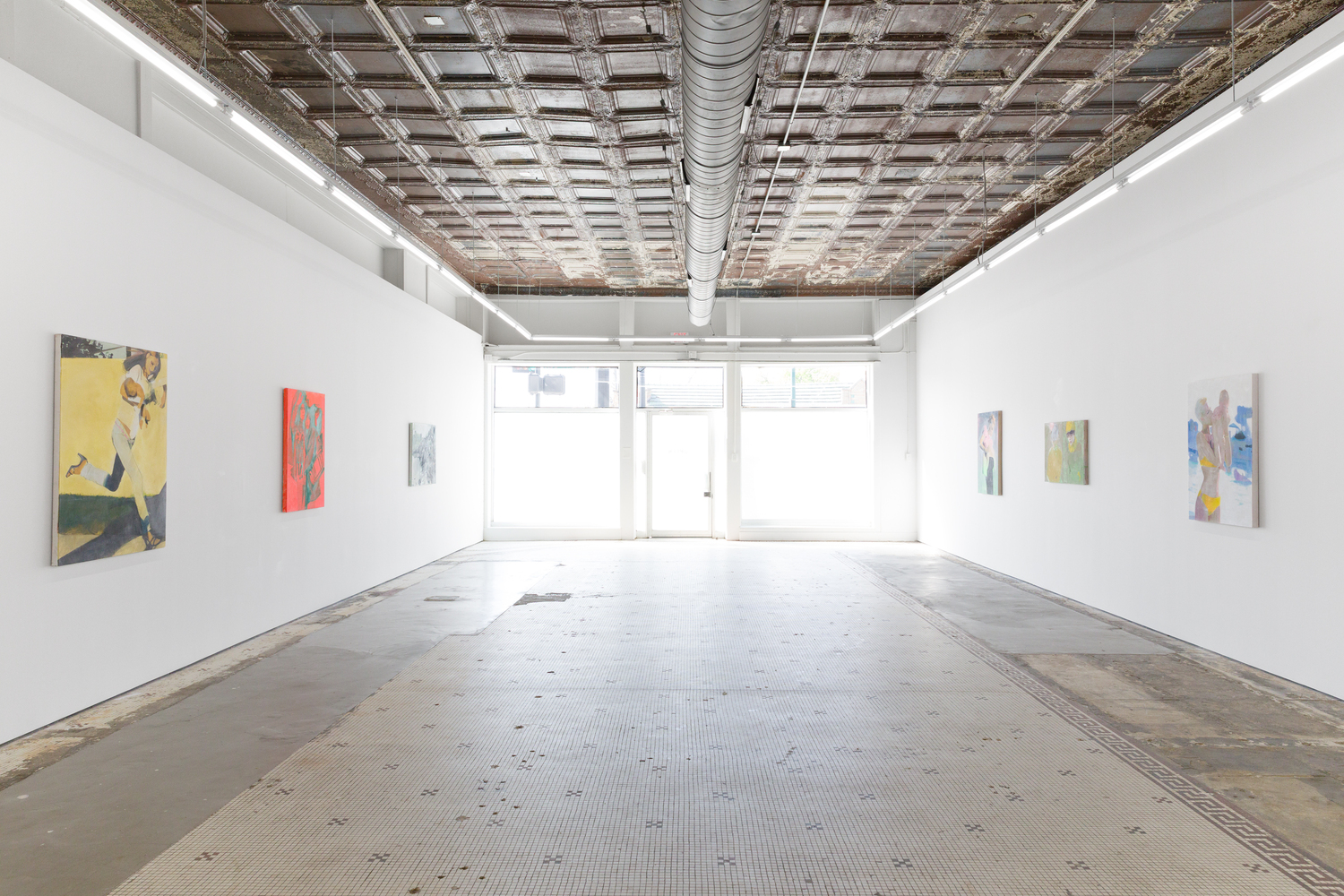
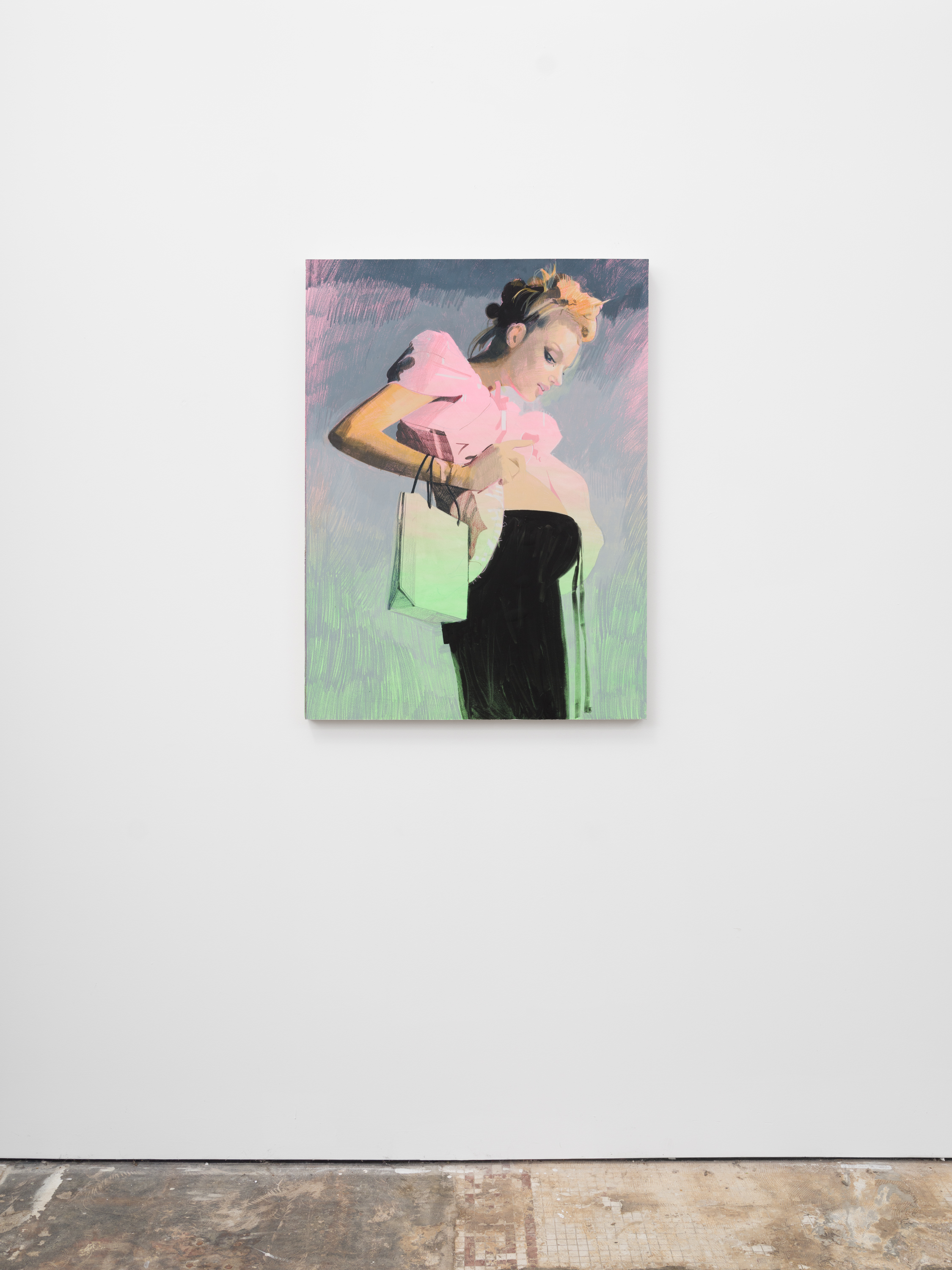
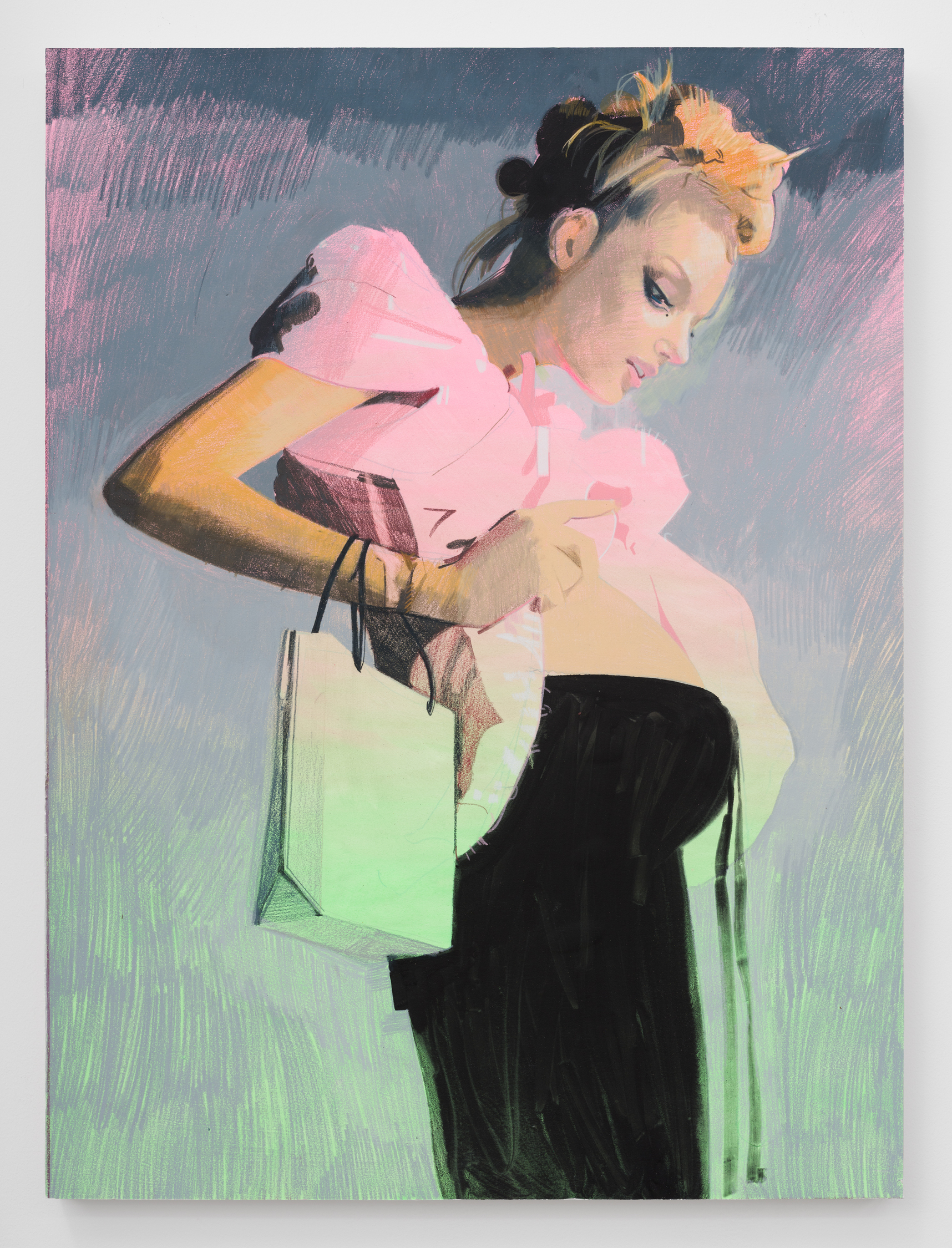
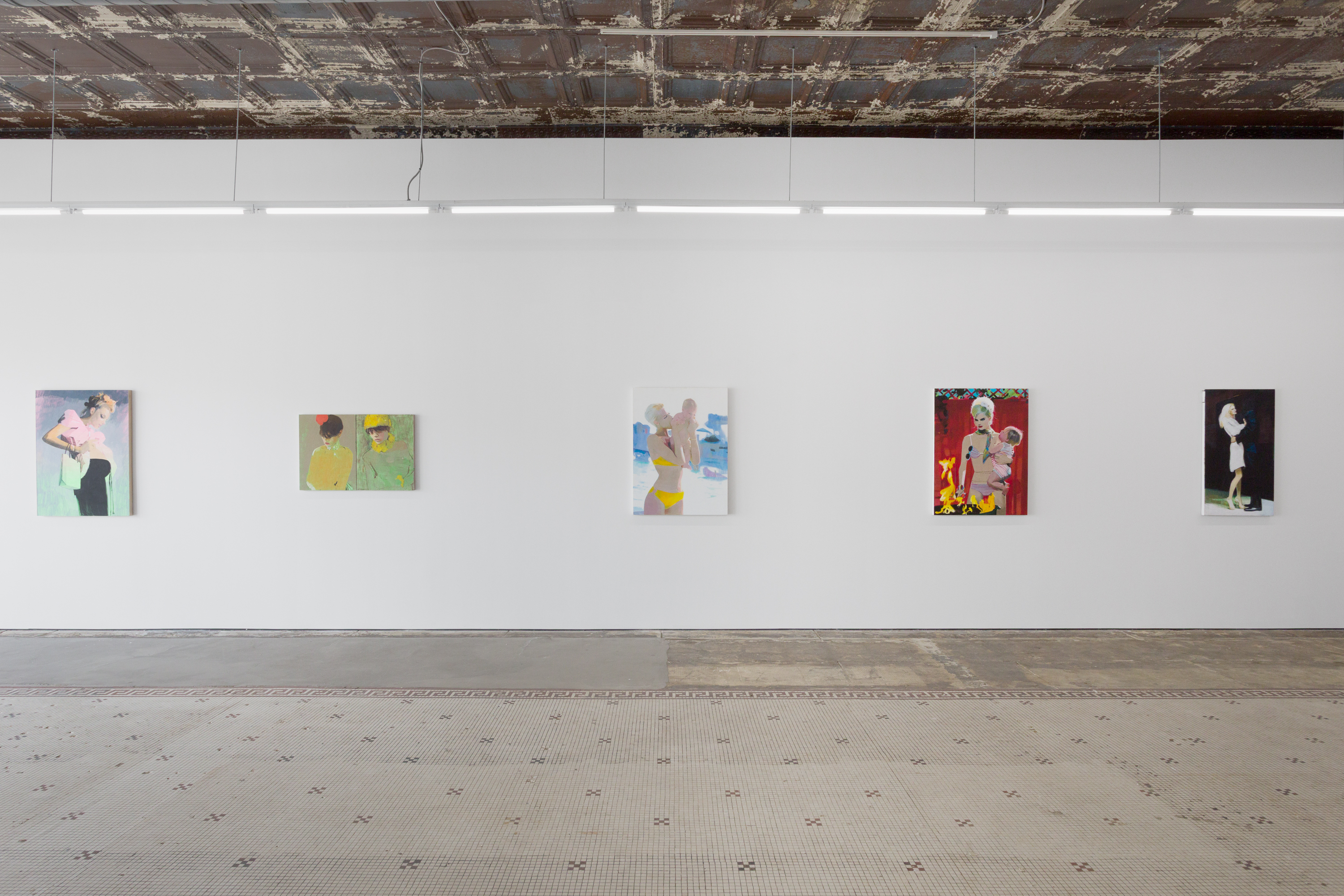
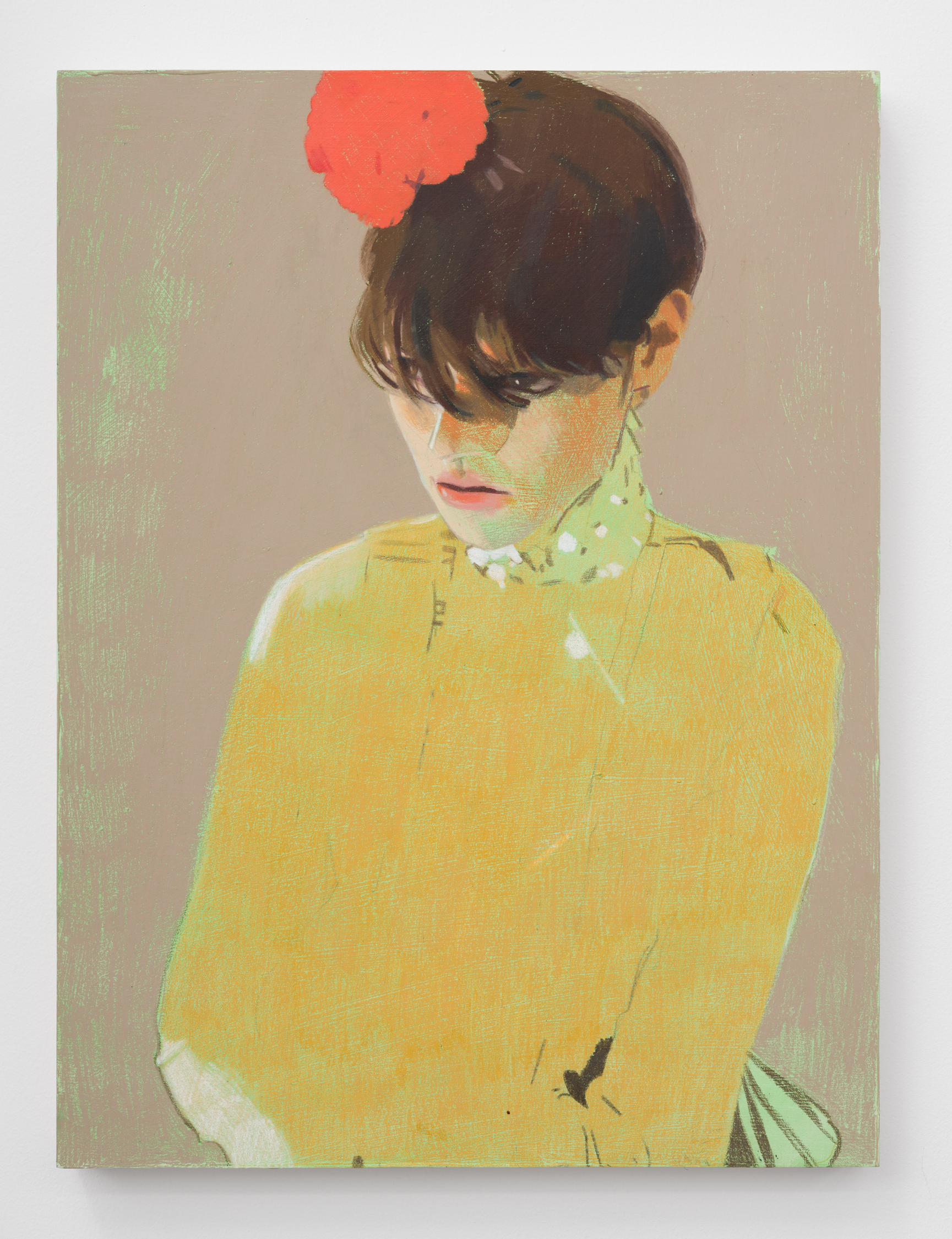
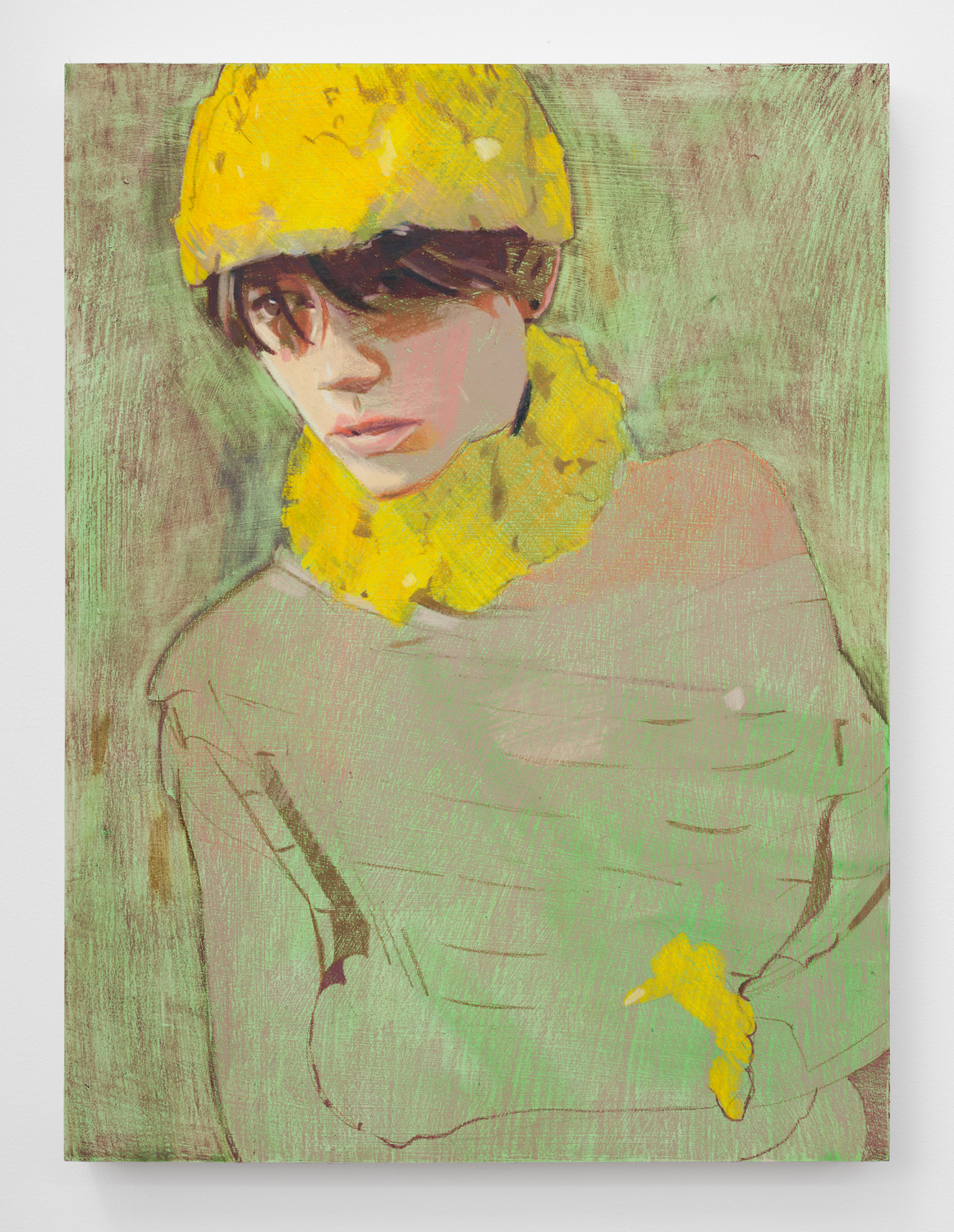
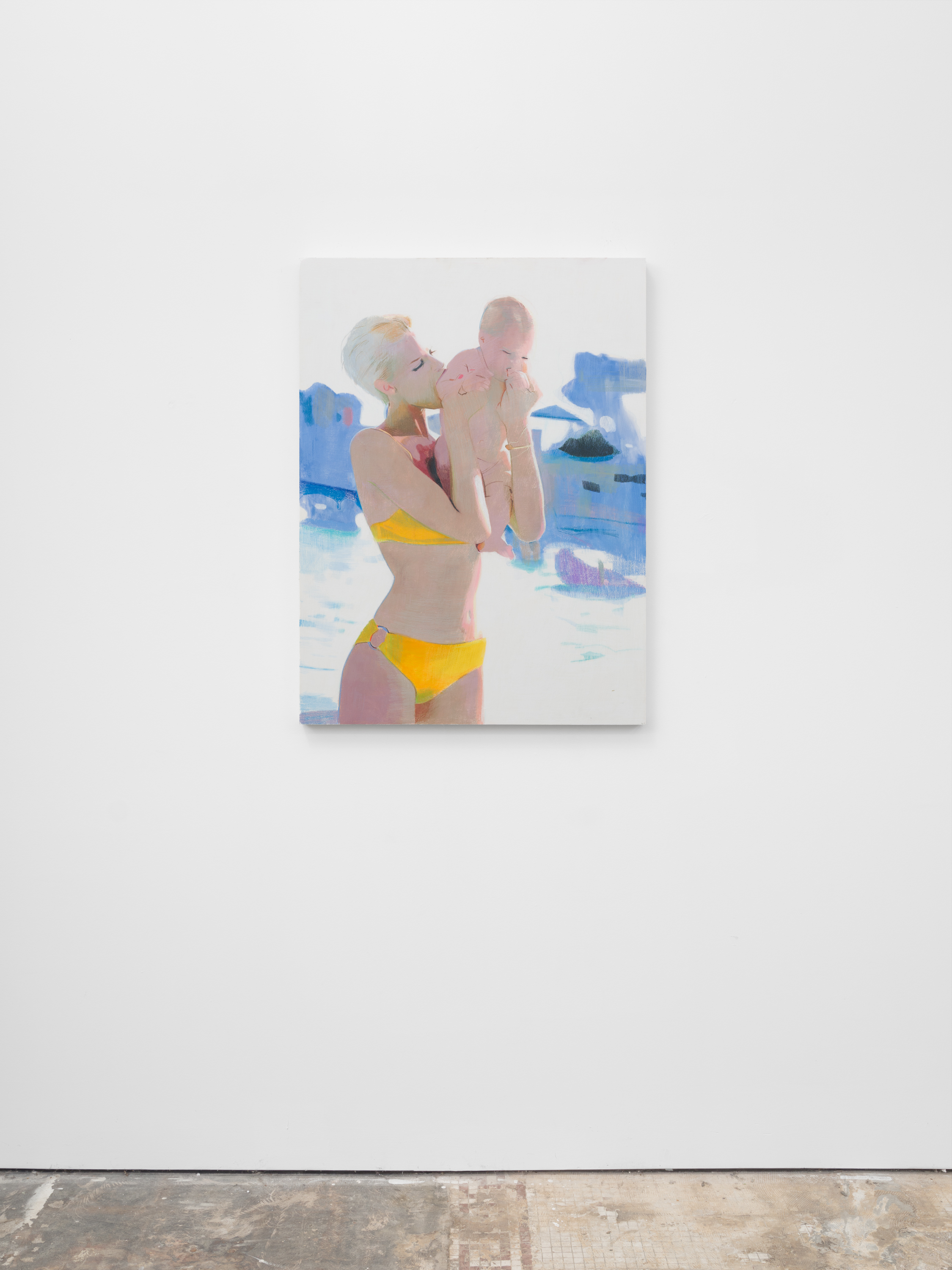
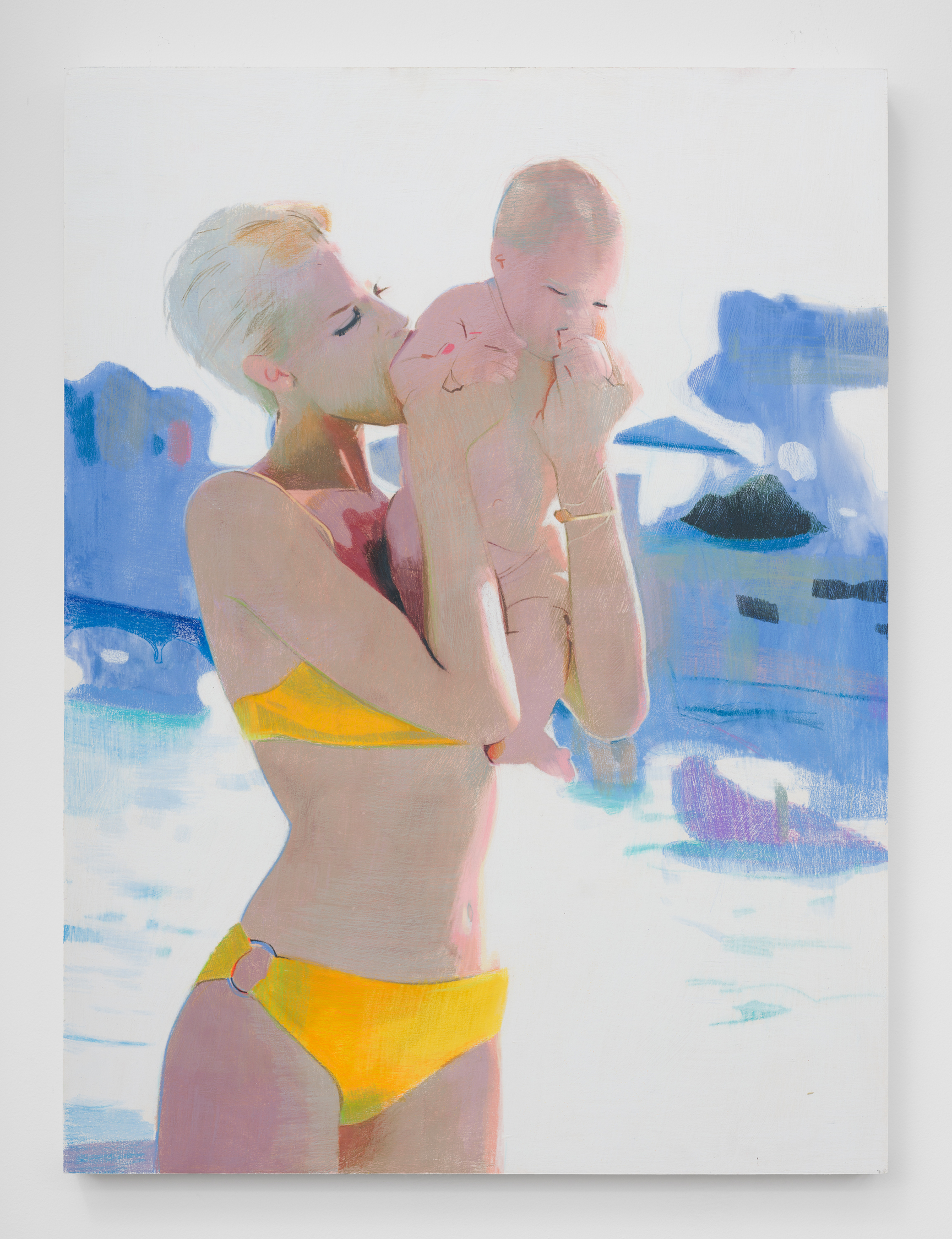
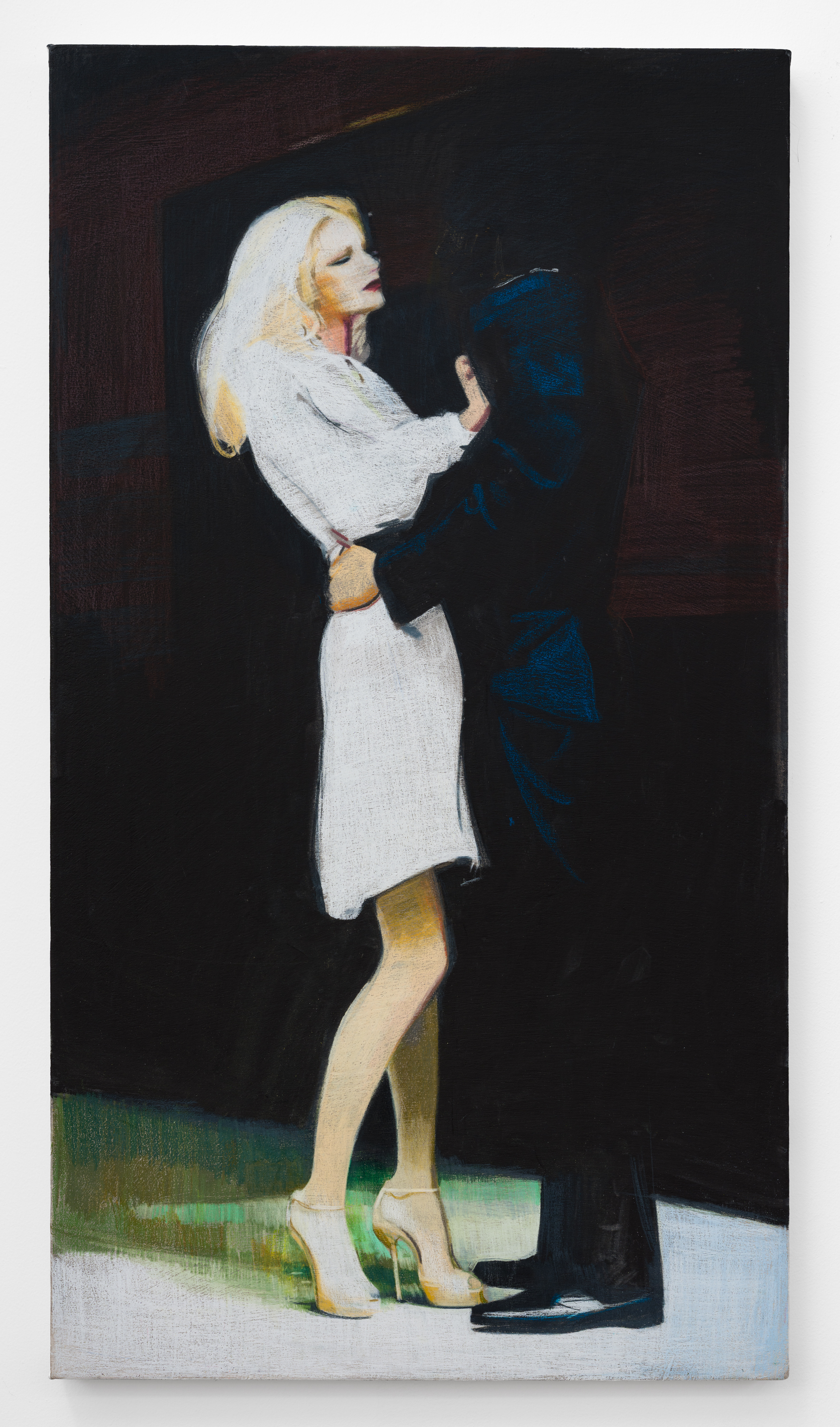
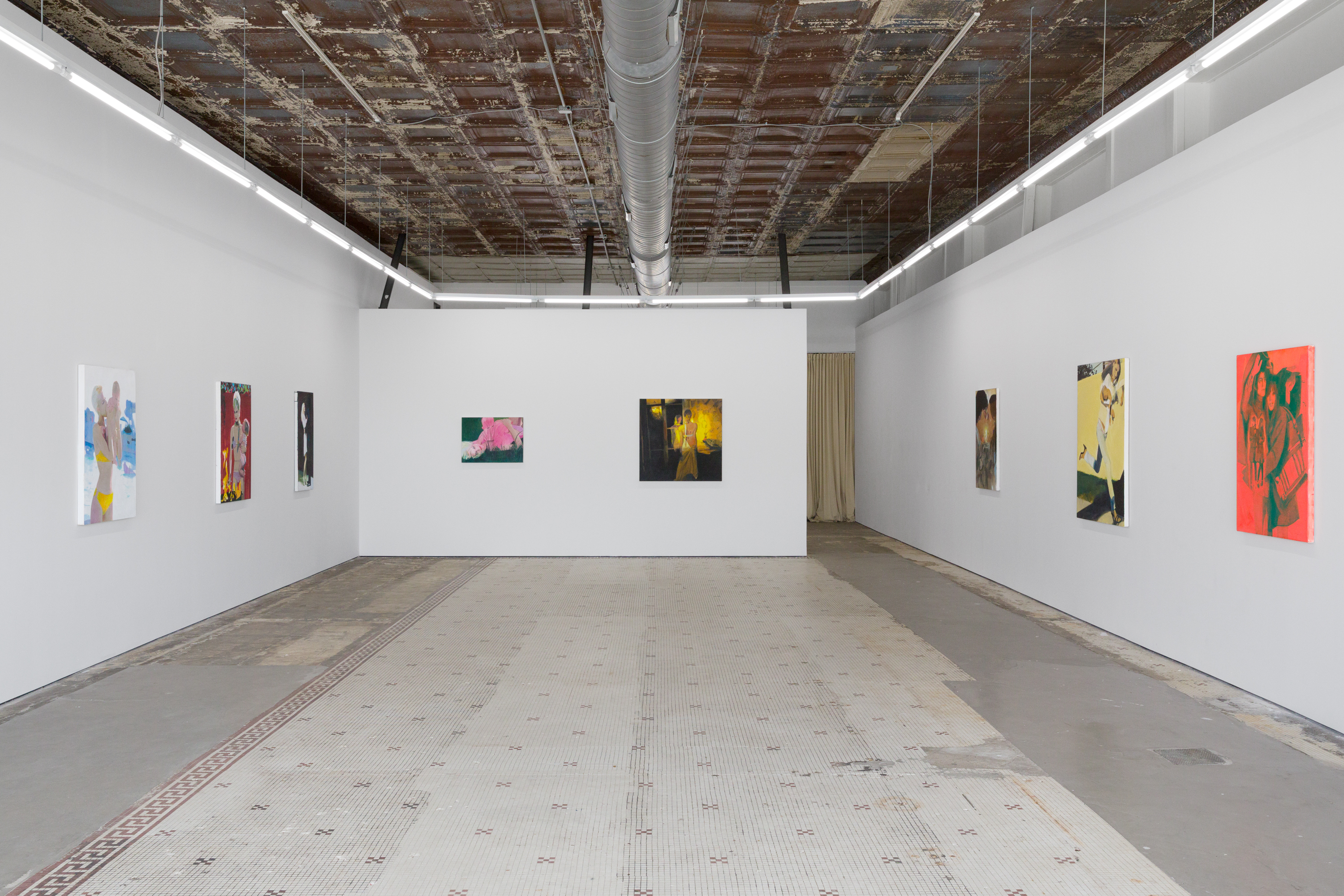
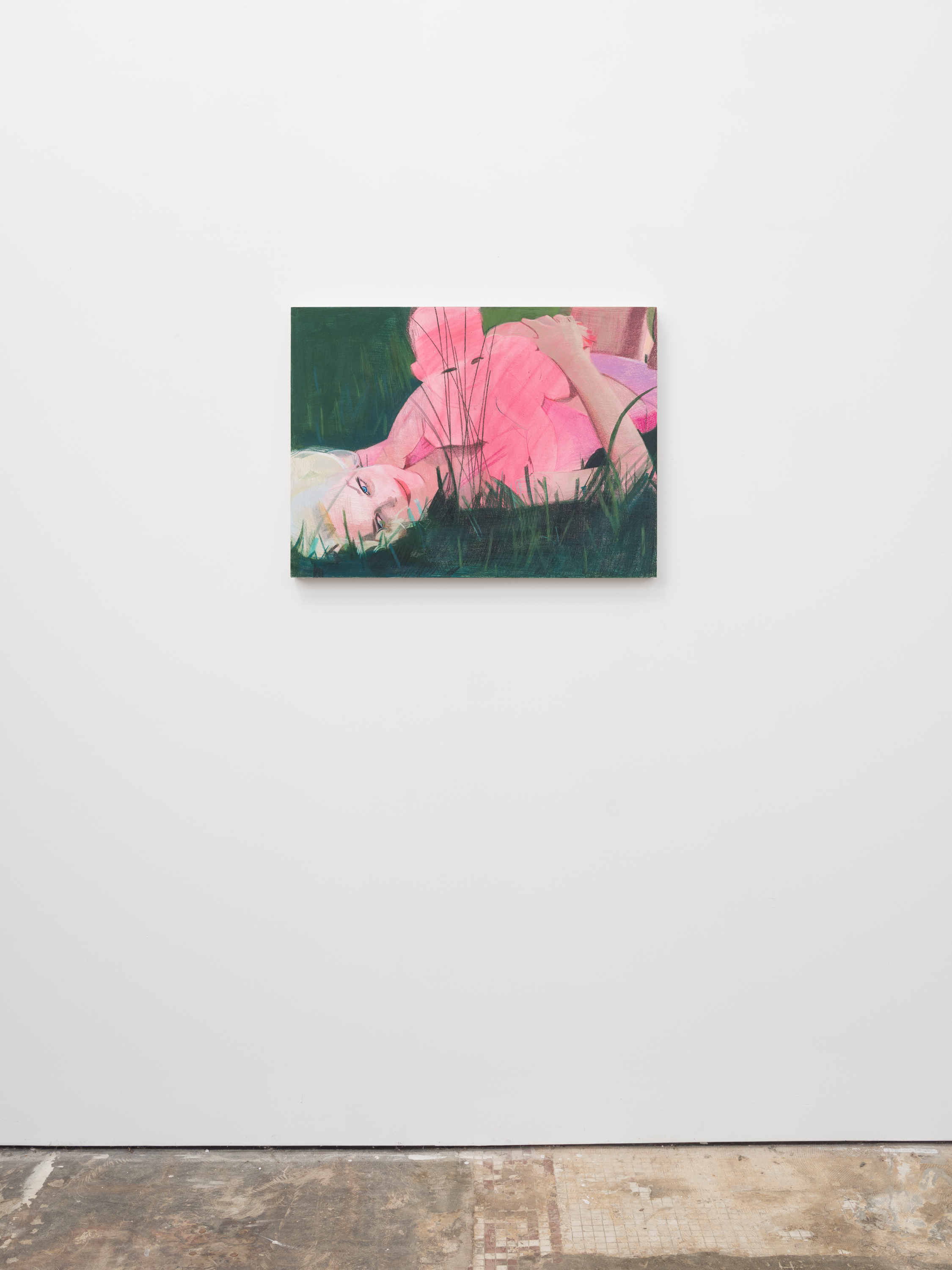
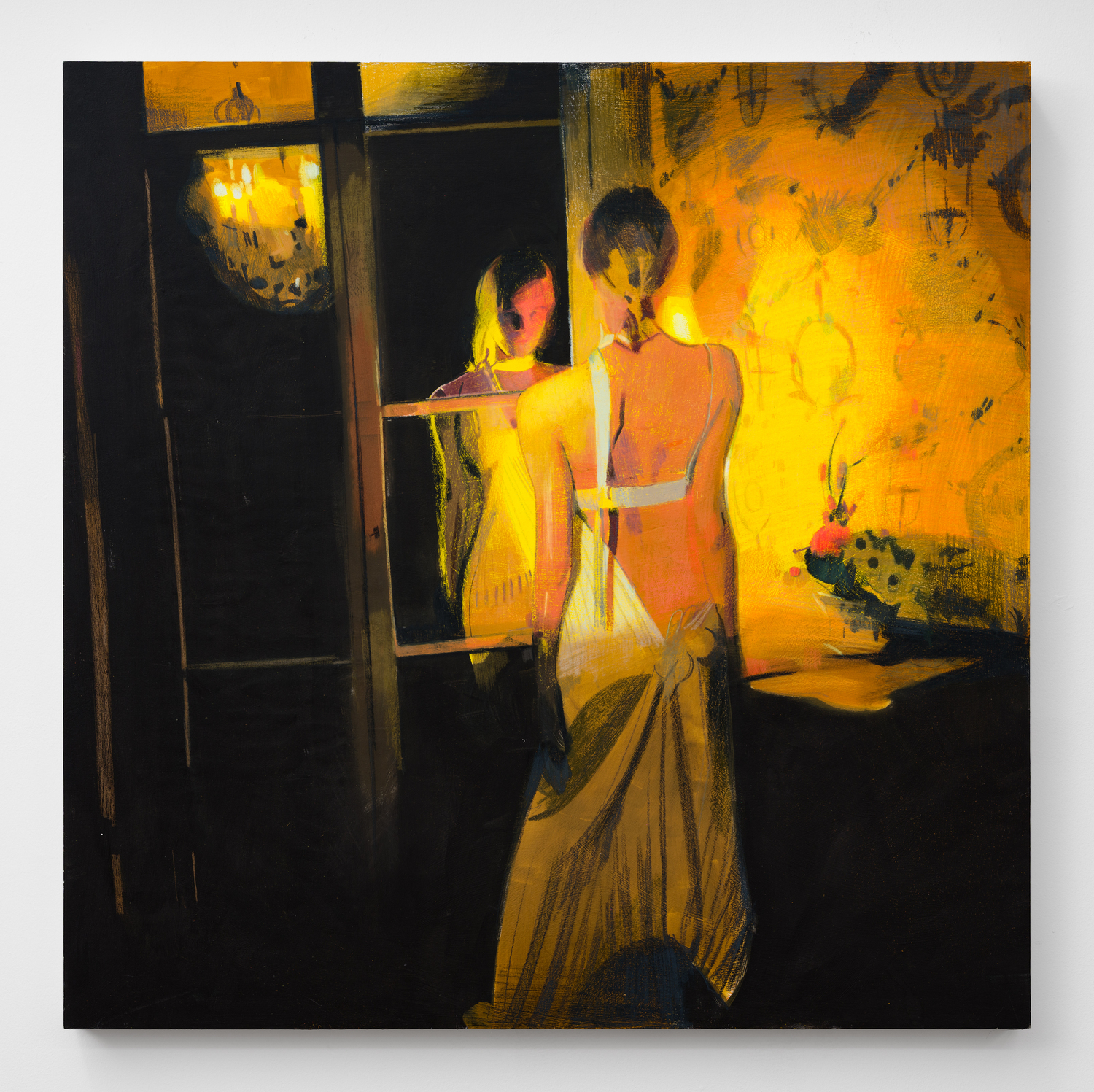
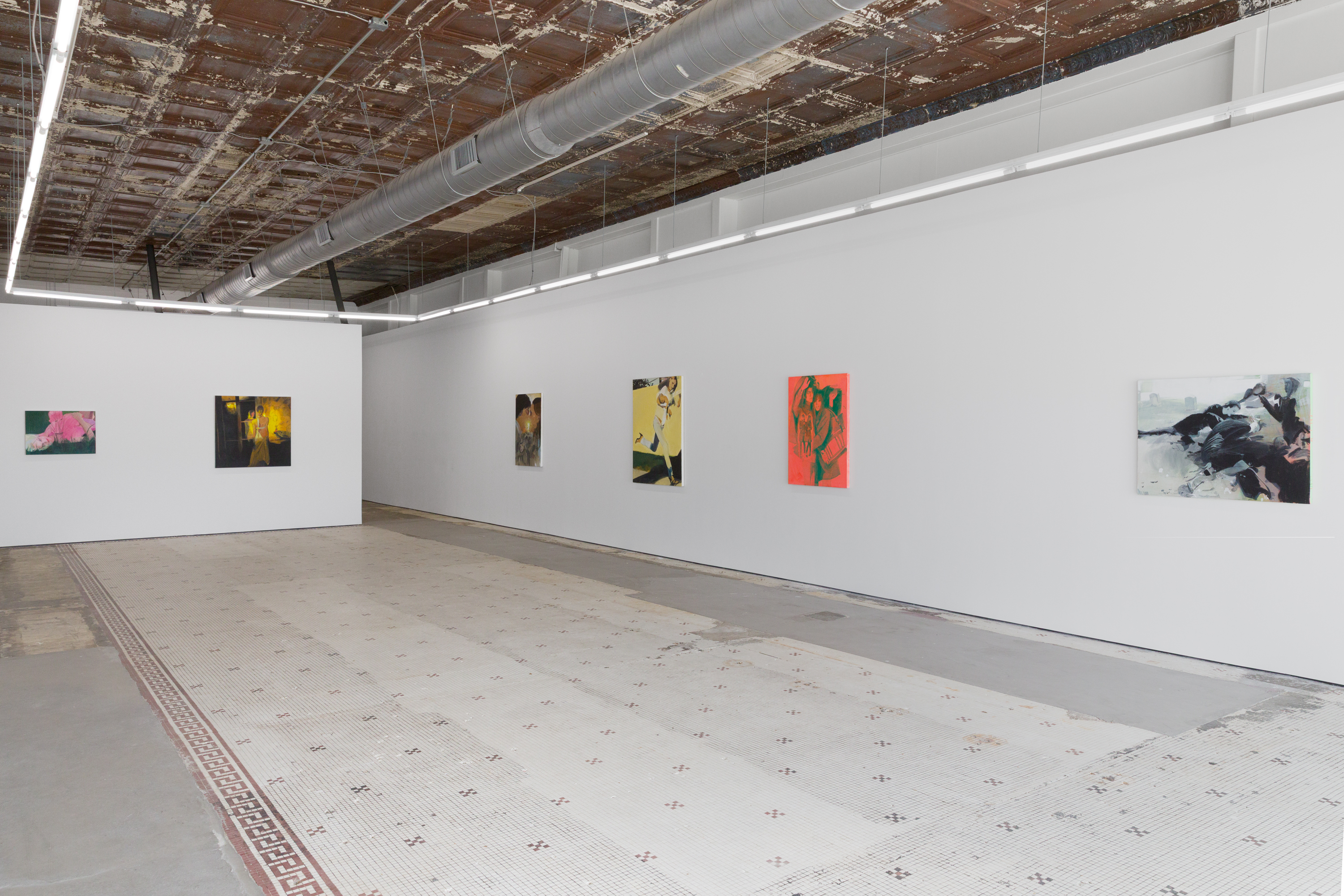
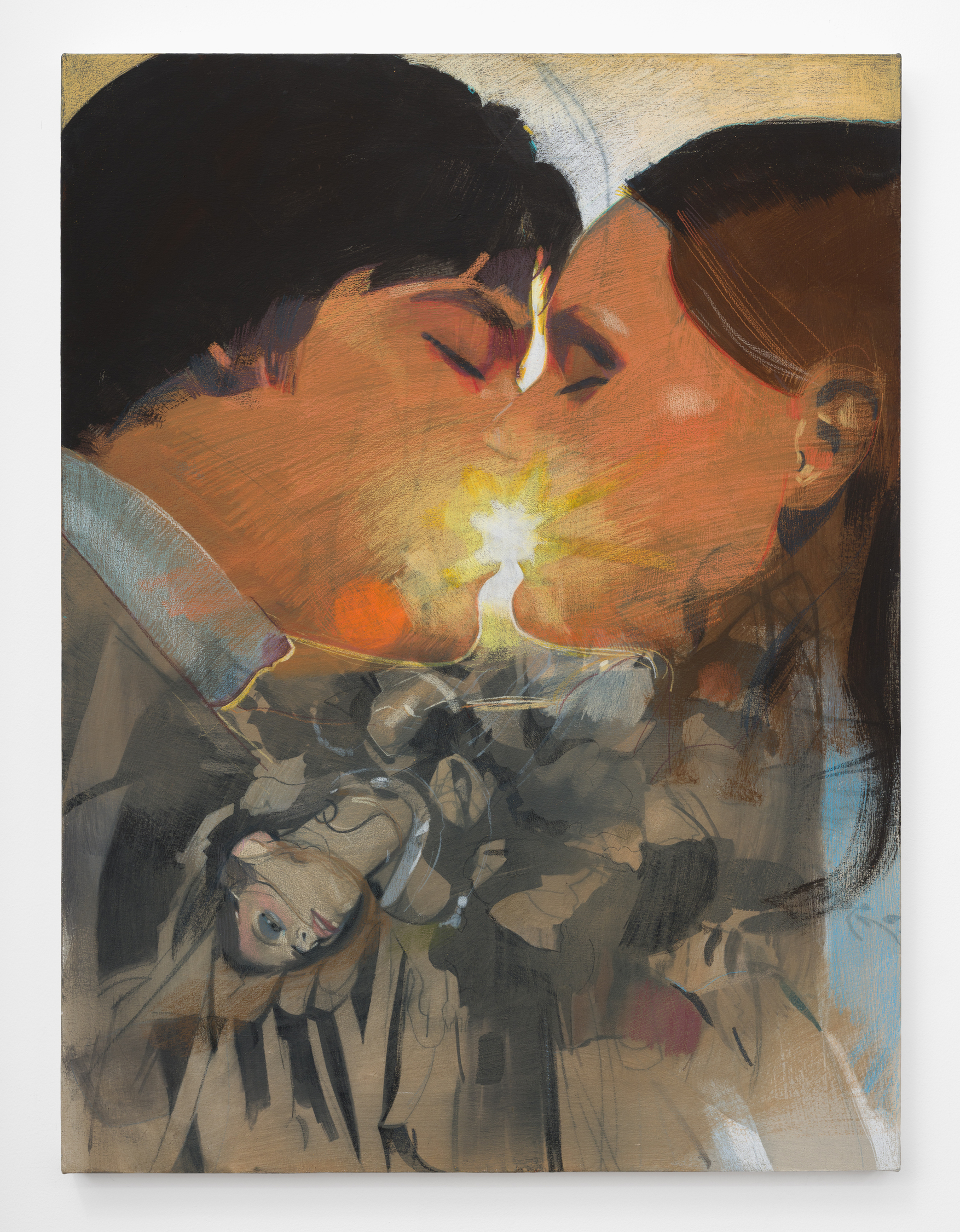
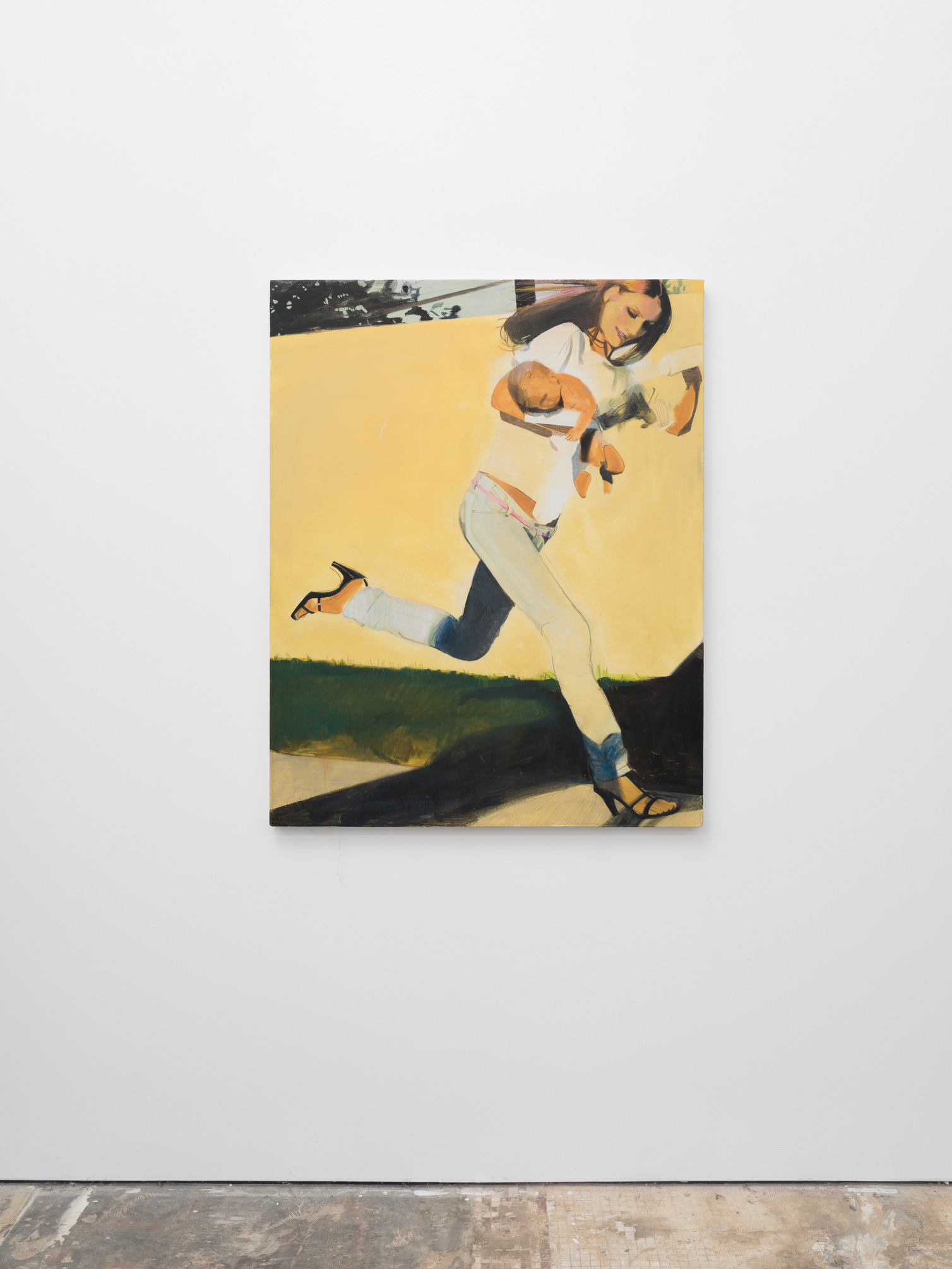
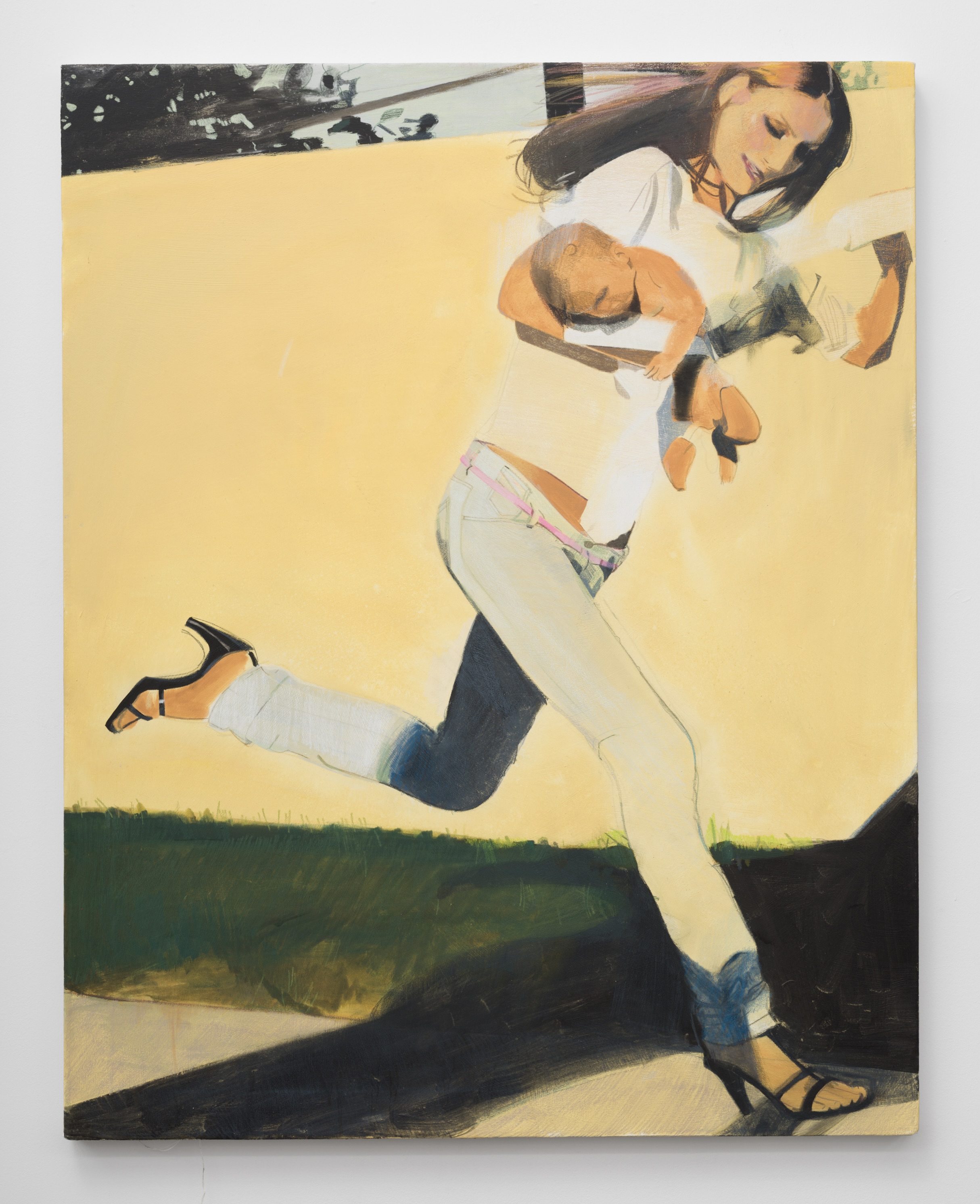
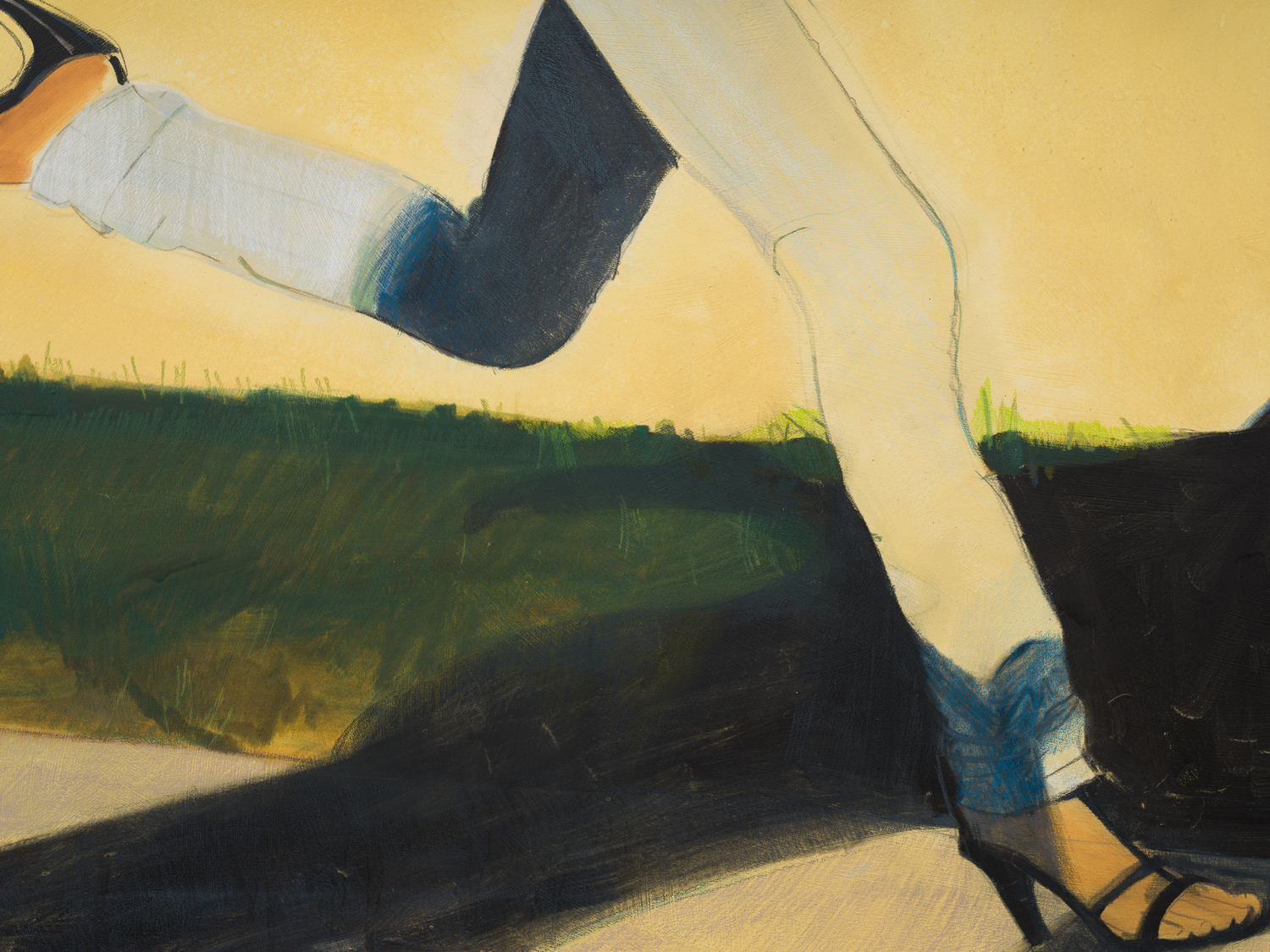
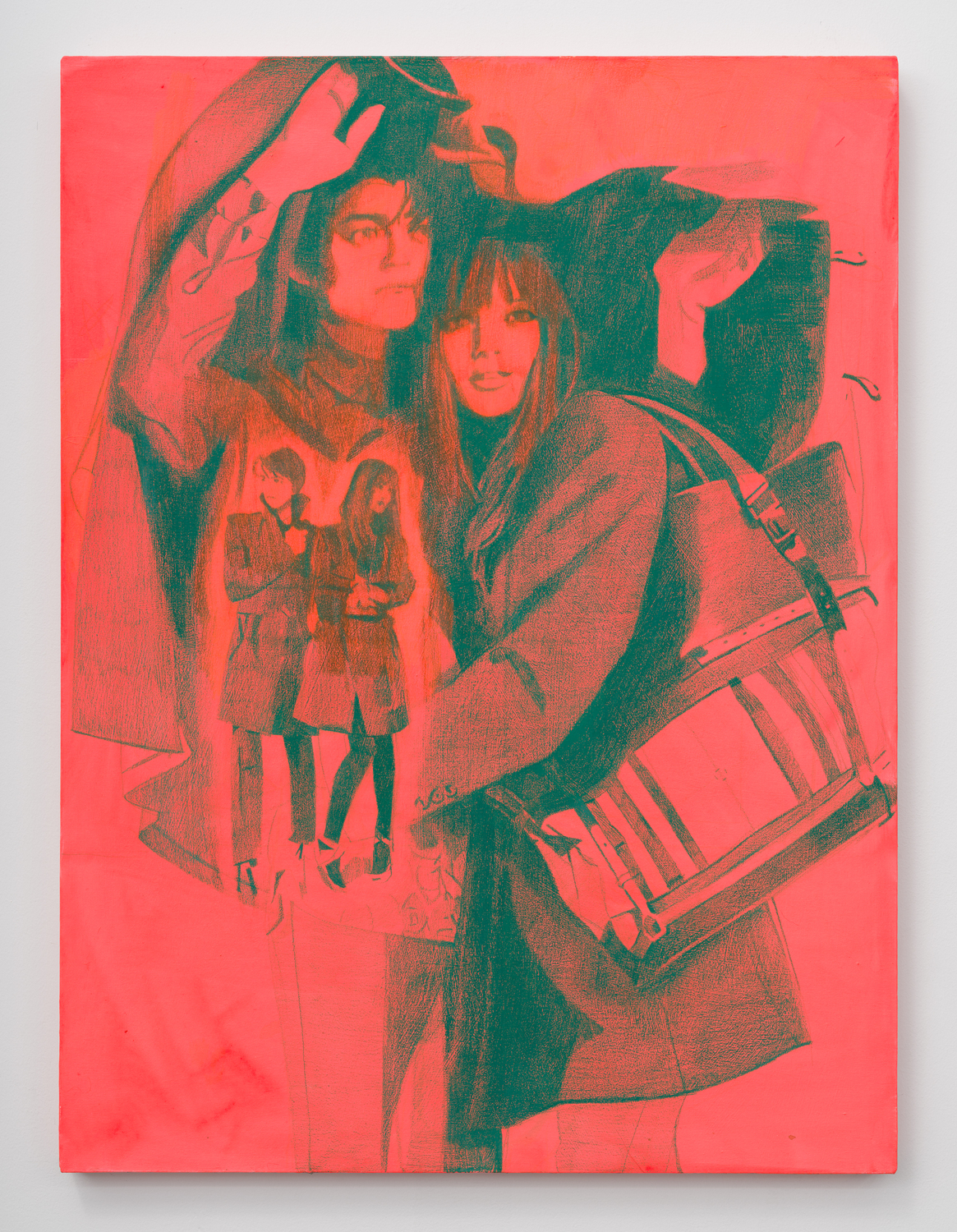
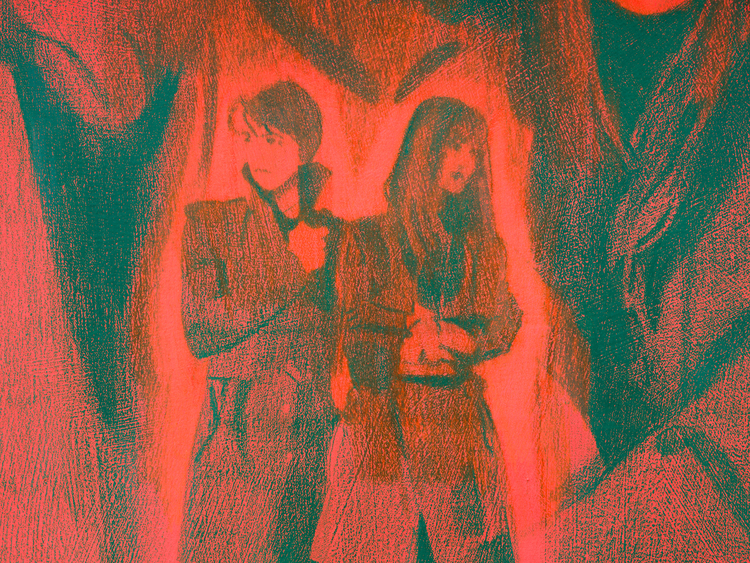
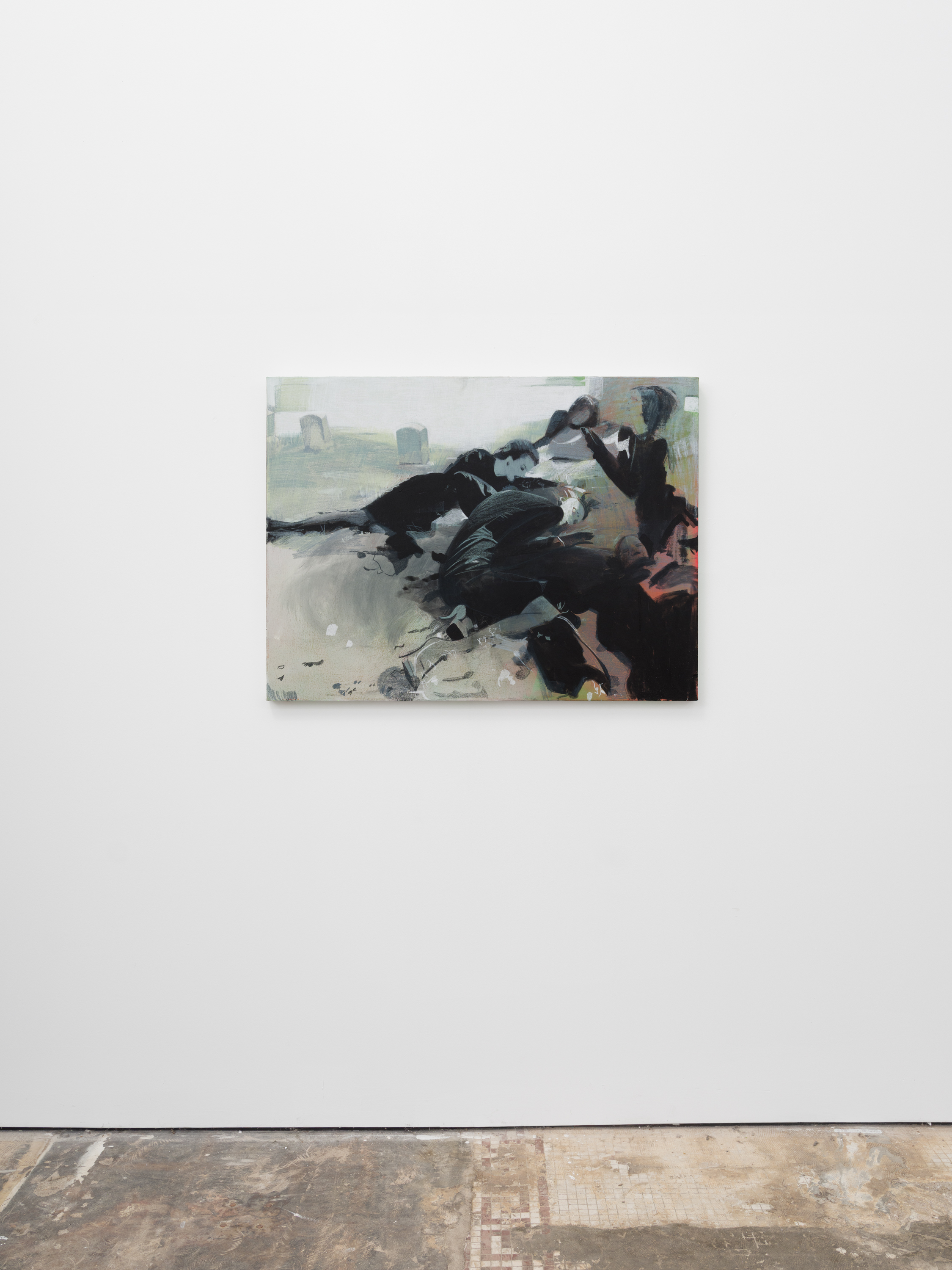
Taurins’ exhibition is a full lifecycle where such cinematic polarities abound and such ancient truths of light and dark dance in unison. Cherubic babies dangle precariously as their mothers sprint frenziedly in high heels or brood over a spitfire barbecue pit. Couples embracing appear in chiaroscuro, filmic cliches turn ambiguous by garish color and phantom bodies. A group of women prostrate themselves in apparent mourning over a cemetery lawn. Together the works here encircle the viewer in a confounding visual and narrative experience akin to the phenomenon of life review in which the sum of one’s life experiences are seen all at once in the mind’s eye; the joy present in one work belies the gravity of the next, at times even individual elements confound the dichotomous emotional whole of a single work. The artist’s interest in pre-Hays Code Hollywood films is also evident in this mix where image unbridled by doctrinal restraints yields a more ambiguous kind of tension. This is life as it is, not as we wish it to be, and the artist’s hand dazzles with that knowing thrust, her stage set for a multitude.
Autobiography is not entirely absent from this encompassing world—Taurins’ personal is also universal. Her interest in Taoist thought subtly emerges in the works on view, and more pronouncedly does her recent stint of baby fever. The artist’s experience considering the possibilities of pregnancy and motherhood are revealed not just in her figuration but as powerfully in its treatment. Fanny’s prank in Funny Girl resonates in darker ways through Taurins’ own woman in white, an ersatz bride confronting her reflection in the midnight glow of a domestic scape, or in the resigned smirk on the face of her sprinting mom juggling baby, diaper and powder while fleeing, or running toward, the unknown. These are the artist’s showstoppers, double entendres simultaneously proving her skill and laying bare her all-too-real fear at the thought of motherhood’s consequences for a woman in the prime of her career. “All universal things shoulder the Yin and embrace the Yang.”
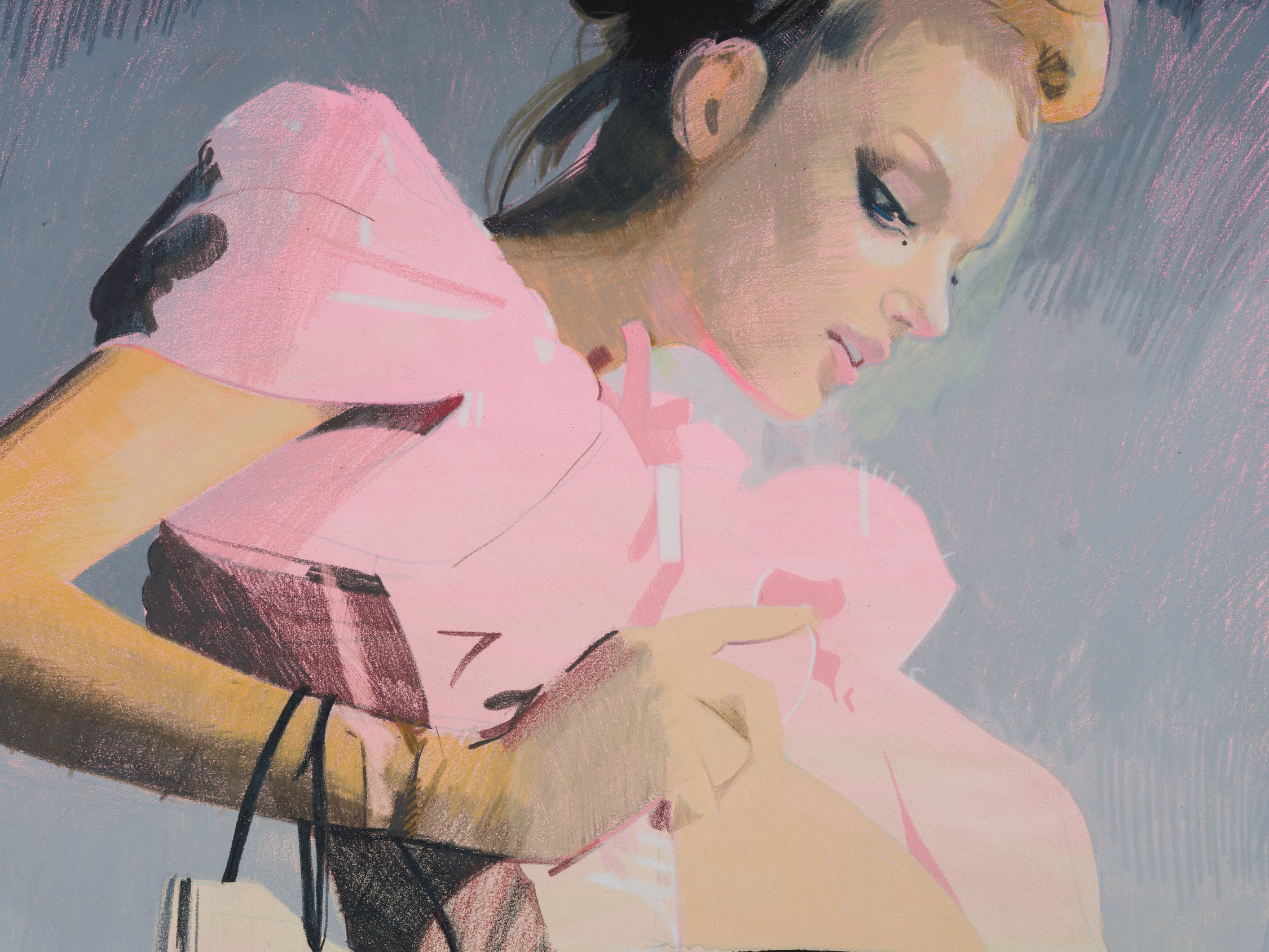
The cinematic cast of these works, be they personal or conceptual, may be the ultimate showstopper in the exhibition; the medium is a message here. The act of drawing is often relegated to the preparatory, a rehearsal or schema for something not fully realized. The grandiosity with which Taurins builds the drawings in her exhibition is unmistakably final. This is a closed loop into which all the stuff of a life is poured. An image impregnating itself, a color-blocked toddler, face undefined but for a pair of eyes peering out from a fecund landscape, sunsets and blue skies piercing idyllic figures like a cut to rolling credits on a screen—this world is self-propagating and needs no formal advance to be fully realized. Taurins’ mark making is unconstrained by expectation; it shoulders a universe of its own.
Hannah Taurins (b. 1997, Houston, Texas) lives and works in New York. She received a BFA from Cooper Union, New York. Recent solo exhibitions include: Theta, New York (2025); Chateau Shatto, Los Angeles (2023); Brant-Timonier, Palm Beach (2023); and Theta, New York (2022). Select group exhibitions include: Hans Goodrich, Chicago (2026); American Art Projects x Jeffrey Deitch, Miami; Adler Beatty, New York; American Art Projects, Berlin; High Art, Paris (all 2025); High Art, Seoul, KR (2024); Amanita, New York (2023); Shoot the Lobster, New York; Venus Over Manhattan, New York; In Lieu, Los Angeles; and Entrance, New York (all 2022).
.jpg)
.jpg)
.jpg)
.jpg)